Showing posts with label science. Show all posts

Wednesday, June 29, 2016

Jupiter! We are almost there.

As most Americans get ready to enjoy the fourth of July long weekend with barbeques, fireworks, or traveling to new places, NASA is getting ready for their own celebrations and fireworks, and exploring new worlds! Juno mission is expected to enter Jupiter's orbit after a five year journey! It will then orbit the gassy planet for a year to achieve many scientific objectives like mapping Jupiter's magnetic field, looking for its solid core, understanding its origins and evolution, and as a result origins and evolution of our Solar System.

No spacecraft has ever got this close to Jupiter. Jupiter poses many dangers and risks to Juno among it is the high levels of radiation so deep in the radiation belt. Juno orbit insertion (JOI) is challenging.  In fact, Juno spacecraft will risk Jupiter's fireworks for Science.  Here is our 4th of July movie trailer:


So this 4th of July, when gathered with friends and family, if you want a SciFi thriller movie to watch, watch the real deal!

p.s. I cannot believe I had started this blog exactly 5 years ago on July 5 and even wrote about Juno's launch.


References:

[1] http://www.nasa.gov/mission_pages/juno/main/index.html
[2] https://www.missionjuno.swri.edu/
[3] http://www.nasa.gov/press-release/nasa-announces-coverage-media-activities-for-juno-mission-arrival-at-jupiter
[4] http://www.jpl.nasa.gov/news/news.php?feature=6538

Wednesday, May 15, 2013

Magnetospheric Multiscale Mission

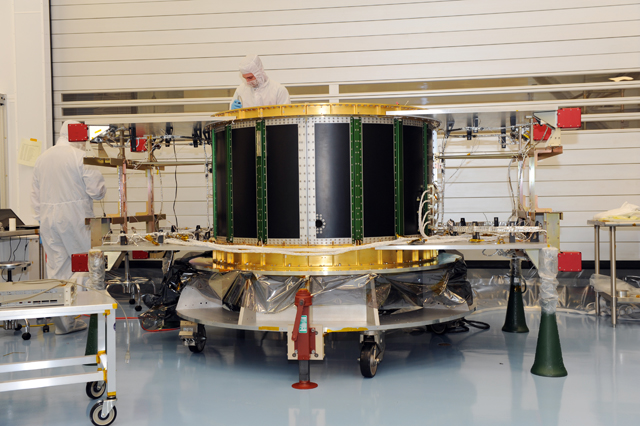
Designing, building, launching, and operating a spacecraft is hard and detailed enough, requiring many hours of manpower at every stage.  Recently, there have been missions that launched two spacecrafts to work together to achieve mission goals.  Stereo for studying the Sun and GRAIL for studying the moon are examples of such missions.  It seems like we have built so much confidence and got bold enough to try a mission with 4 spacecrafts:  Magnetospheric Multiscale  (MMS) Mission.


MMS will do something unique:  it studies how the Earth's and Sun's magnetic fields connect and disconnect, and as a result  transfer energy to Earth and other planets in a process called reconnection. MMS uses 4 identical spacecrafts spaced in Earth's orbit, to obtain 3-dimensional data of the magnetospheric boundary to study this process.  MMS  uses the Earth's magnetosphere as a natural laboratory that can be directly studied.

MMS is being built in NASA Goddard Space Flight Center and is currently scheduled to launch in October 2014.  The mission is similar to ESA's Cluster mission with more spatial and temporal resolution, allowing to study the electron diffusion region.

References:
[1] Magnetospheric Multiscale  (MMS) Mission.
[2] http://www.nasa.gov/centers/goddard/news/topstory/2009/mms_magnetic.html
[3] http://mms.gsfc.nasa.gov/about_mms.html
[4] http://en.wikipedia.org/wiki/Magnetospheric_Multiscale_Mission
[5] http://en.wikipedia.org/wiki/Cluster_mission

Friday, March 1, 2013

Earth's Third Radiation Belt!

It was over 50 years ago in 1958 that Explorer 1 and Explorer 3 confirmed the existence of two radiation belts around Earth under Dr. James Van Allen's direction [1].  Van Allen Probes, previously called Radiation Belt Storm Probes (RBSP), were launched on August 30, 2012.   The objective of this mission, as its name suggests,  is to

"study two extreme and dynamic regions of space known as the Van Allen Radiation Belts that surround Earth. Named for their discoverer, James Van Allen, these two concentric, donut-shaped rings are filled with high-energy particles that gyrate, bounce, and drift through the region, sometimes shooting down to Earth's atmosphere, sometimes escaping out into space. The radiation belts swell and shrink over time as part of a much larger space weather system driven by energy and material that erupt off the sun's surface and fill the entire solar system." [2]

While most satellites are designed to turn off during intense radiation bombardments,Van Allen Probes are built to operate, tolerate, and collect data during such harsh conditions.

It is thus so fortunate and fitting that NASA Scientists have discovered a third radiation belt around our very own home planet Earth using Van Allen Probe's data soon after its launch [3].  To learn more about this discovery, please visit here.

Credit: NASA/Van Allen Probes/Goddard Space Flight Center.


This discovery is a humbling reminder that there is a lot yet to be learned about our home, Earth, let alone other planets and corners of this vast universe.

References:
  1. http://en.wikipedia.org/wiki/Van_Allen_radiation_belt 
  2. http://www.nasa.gov/mission_pages/rbsp/mission/index.html
  3. http://www.nasa.gov/mission_pages/rbsp/news/third-belt.html

Wednesday, February 6, 2013

Largest known prime number

World's known largest prime number with 17-million digits is found! It is 257,885,161 -1, and thus it is a Mersenne prime number. A Mersenne prime number has the form 2p -1, where p is a prime. Learn more about this finding here.

Monday, February 4, 2013

Behind the LASIK Eye

By now you should have learned that Baltimore Ravens have won the Super Bowl :-) I have learned a pleasantly surprising piece of information, rather late. Do you know who is the inventor of the LASIK eye surgery? Dr. Gholam Peyman! Learn more about him here:


http://en.wikipedia.org/wiki/Gholam_A._Peyman

And here:

 http://www.infozine.com/news/stories/op/storiesView/sid/54753/

Thursday, January 24, 2013

Keep Playing!

The game is on, and the job is to solve hard scientific problems.  So, in future instead of blaming every bad incident to kids playing computer games too much, people associate scientific breakthroughs, better life quality, and technologies to it.  Instead of kids getting more violent, they may get more innovative and creative, and learn a few things! How about that? Here are some existing games, aiming to solve hard scientific problems, according to the Scientist:

http://www.the-scientist.com//?articles.view/articleNo/33843/title/Game-On/


If all goes well, there will be another one added to this list, by truly yours, maybe next year?

Stay tuned, and keep playing the game of science, discovery, and exploration!

Thursday, May 31, 2012

Venus Transit!

Did you know that June 5-6 is our last chance to see a Venus transit? Unless there be a scientific breakthrough that allows us to leave 105 more years!  So, do not miss it!  Learn about it and how you can observe it.


References: 
[1] http://www.nasa.gov/mission_pages/sunearth/news/2012-venus-transit.html
[2] http://www.transitofvenus.org/
[3] http://open.nasa.gov/blog/2012/05/17/venus-transit/
[4] http://eclipse.gsfc.nasa.gov/transit/venus0412.html

Monday, May 14, 2012

Tesla

Apparently Nikola Tesla did the ground work for the electricity we use everyday (Alternative Current or AC), wireless communication and radio, radar, x rays and more.  Then, how is it that others are credited for each of these inventions?  Was he a smart scientist and engineer with great vision and initiative but just could not finish, package, and sell his ideas?  Or was the author of this site just a big fan of him and not so much of Thomas Edison?

References:
  1. http://en.wikipedia.org/wiki/Nikola_Tesla
  2. http://theoatmeal.com/comics/tesla


Tuesday, March 27, 2012

Our oldest rock

What is the oldest thing that you have ever held in your hands? How ancient and antique was it? Well, you cannot beat the age of what I held today: the oldest solid rock in our solar system, a meteorite that is 4.56 billion years old! Older than our Earth!

Thursday, October 27, 2011

NPP Launch

"The NPOESS Preparatory Project (NPP) mission is scheduled to launch on Friday October 28 at 2:48 a.m. PDT/ 5:48 a.m. EDT from the Vandenberg Air Force Base in California. NASA's Goddard Space Flight Center, Greenbelt, Md., is managing NPP for the Earth Science Division in NASA's Science Mission Directorate, Washington.

NPP will extend and improve upon the Earth system data records established by NASA's Earth Observing System (EOS) fleet of satellites that have provided critical insights into the dynamics of the entire Earth system: clouds, oceans, vegetation, ice, solid Earth and atmosphere."

You can watch it live on NASA TV or in person if you are in CA close to Vandenberg Air Force Base! Learn more about this mission here.

Reference:
[1] http://www.nasa.gov/mission_pages/NPP/main/index.html

Wednesday, October 26, 2011

No grounds for climate sceptics' concerns

Global warming has been a controversial topic. Policies required to revert its affects and progress have huge economical and thus political implications to the extent that global warming has often found its place in political debates and is treated as such instead of a scientific subject. It has many skeptics despite various scientific evidence supporting it. The Intergovernmental Panel on Climate Change (IPCC) and Al Gore won the 2007 Nobel peace prize "for their efforts to build up and disseminate greater knowledge about man-made climate change, and to lay the foundations for the measures that are needed to counteract such change" [1]. Some used the email leaks in 2009 to suggest conspiracies that exaggerated the data supporting global warming [2]. It was a huge setback but many scientists who used that data were willing to start their research and analysis all over again if they had to with enough transparency to win over the skeptics. Well, an independent group of international scientists made their job much easier and announced their investigation results: "Independent investigation of the key issues sceptics claim can skew global warming figures reports that they have no real effect"[3].

[1] http://www.nobelprize.org/nobel_prizes/peace/laureates/2007/
[2] http://articles.businessinsider.com/2009-11-20/green_sheet/30085487_1_real-temps-warming-travesty
[3] http://www.guardian.co.uk/environment/2011/oct/20/global-warming-study-climate-sceptics

Monday, October 3, 2011

Kudos to NSF!

Balancing family life and professional work is a hard task, both for men and women. Today's job market and economy is so competitive that scientists and researchers have to put so many hours going extra miles, performing duties not necessarily listed in ones' job description. These can be reviewing papers, proposals, hosting events, mentoring interns, bringing money and resources for one's projects, etc. One cannot simply just sit behind a desk and do their assigned tasks. It is like scientists act as secretaries, accountants, lawyers, lobbyists, marketing specialists, teachers, ... and finally a scientist! This requires sacrificing personal time and family time. While both genders are affected by these, women are hit harder: the years you are supposed to put these efforts to get tenure, establish yourself in a field, etc coincide with when one wants to have family and children, specially after being out of the PhD program. While men may be able to delay parenthood, there is not much women can do about their biological clocks. Also, by nature women are more involved in the child rearing process because of unique tasks required of them from nine months of pregnancy to breast feeding. On the other hand, employers can change other clocks if they are interested in maintaining such skilled and educated work force and not make the already low women/men ratios in STEM fields approach zero.

NSF made a bold move. Now, one can delay, or get a break in, using already won research grant funds due to child birth or taking care of an elderly family. This is similar to universities stopping the tenure clock when one goes on maternity leave and restarting it again when the person comes back. I wish more professional conferences start offering child care services so that mothers could travel with their kids and attend talks and conferences with some peace of mind and without feeling guilty about having left their child in a different city, or simply choosing not to attend conferences or work related trips (the option that is often chosen due to circumstances).

Kudos to NSF for recognizing the values of supporting work-life balance policies and taking steps in addressing this issue by not asking scientists to choose between their jobs and families.

Reference:

http://www.washingtonpost.com/opinions/helping-women-reach-their-economic-potential/2011/09/25/gIQA1dODxK_story.html

Tuesday, September 20, 2011

Citizen Science: Discovery of Two New Planets

Scientific data sets grow at a faster pace than scientists can keep up with them, analyze them carefully, make discoveries, find trends, etc. For this reason Citizen Science, asking and involving citizen scientists and volunteers to perform scientific tasks, has become popular and essential. NASA has embraced the idea of Citizen Science and already has several active projects in which the public can participate. The tasks may vary from collecting ground truth data to finding hay in stacks (it is usually the second case).


One of the most successful citizen science projects of NASA is Zooniverse, composed of several projects like Moon Zoo, Planet Hunters, Galaxy Zoo, Solar Stormwatch, etc.

The SETI Institute, dedicated to finding extraterrestrial life, is asking citizens help find signals of others who might be out there in the universe, using setiQuest, by simply scrolling through signals and images and marking unusual activities and features!

Citizen Science has multiple benefits. In addition to the increased work force and chance of making scientific discoveries, it is educational and inspirational for students and a good tool for educators. In addition, it shows the taxpayer the value of the scientific projects by engaging them in the process, and as a result securing various missions and projects. If government decides to cut the budget on a mission, which the public around the globe is extremely invested in and supportive of, chances are very slim. This was the case for Hubble and its beautiful imagery.

We are already seeing the value of the citizen science. Two new planets, possibly habitable, were discovered by citizen scientists participating in Planet Hunting project! There is much more to be found and learned about.

How can you benefit from citizen science in your work and project? Can you interest and engage the public to help you? The public can be students, researchers, and professors all over the world in your field, anyone outside your own organization.

Friday, July 29, 2011

WISE Eye!

WISE eyes have observed the first Trojan asteroid sharing Earth's orbit!
What is a Trojan asteroid? "asteroids that share an orbit with a planet near stable points in front of or behind the planet."

While the news is amazing, it tells me how little we humans know! We are still finding things in our own orbit! Yet, we expect discovering all sorts of things around Mars, Jupiter, Pluto! We have a lot to explore, to learn, to discover!

"Asteroid 2010 TK7 is circled in green, in this single frame taken by NASA's Wide-field Infrared Survey Explorer, or WISE. The majority of the other dots are stars or galaxies far beyond our solar system."   Image credit: NASA/JPL-Caltech/UCLA.

Reference:
http://www.nasa.gov/mission_pages/WISE/news/wise20110727.html

Wednesday, July 27, 2011

Helium again!

Apparently, there is a Helium crisis and there is only a limited amount of it available! Helium is often used for cryogenics, "the study of very low temperatures (colder than any place on Earth), how to produce and exploit them, and how materials behave at those temperatures."*. Many scientists and engineers need to test their devices in cryogenics conditions. For example, for satellites or instruments, which will have to operate under those cold temperatures. To simulate those conditions, they cool down a closed system using Helium. Those experiments are time consuming and expensive. Now, this piece of information, makes it way more crucial to perform these experiments wisely and correctly; It is not just time, manpower, and good data that is lost if these engineering or scientific cryogenics experiments are not conducted correctly, but a scarce resource that cannot be obtained again.

p. s. I wish I knew this when I was performing analysis on hundreds of images obtained at cryogenics condition. I wonder how much that project contributed to this crisis!

* http://www.magnet.fsu.edu/education/tutorials/magnetacademy/cryogenics/